
Welcome to DongGuan ChengYang, your premier CNC machining service provider for Texas. With years of experience in the industry, we are dedicated to delivering high-quality machining solutions to meet all your needs. Our state-of-the-art facilities and team of skilled professionals ensure precision and accuracy in every project we undertake.
At DongGuan ChengYang, we understand the importance of efficient and reliable CNC machining services for Texas businesses. From prototyping to production runs, we have the expertise to handle projects of all sizes and complexities. Whether you require custom parts or components, our commitment to excellence guarantees your satisfaction.
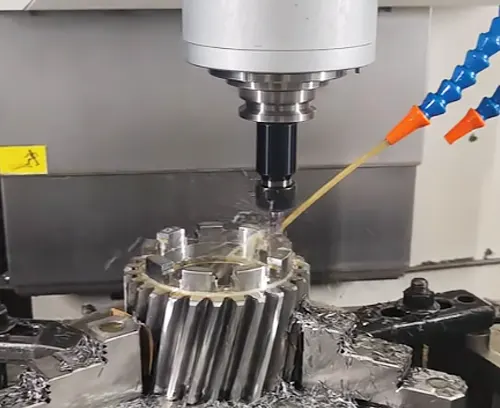
CNC Milling
Our shop features CNC milling capabilities, manufacturing precision parts with short lead times.
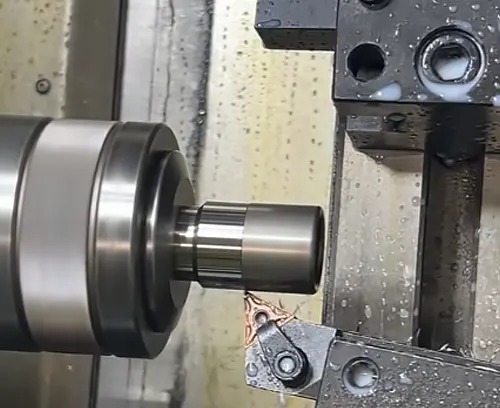
CNC Turnning
Our CNC lathes, turning centers, and mill-turn equipment enable us withefficiency to construct a broad range of components for every client.
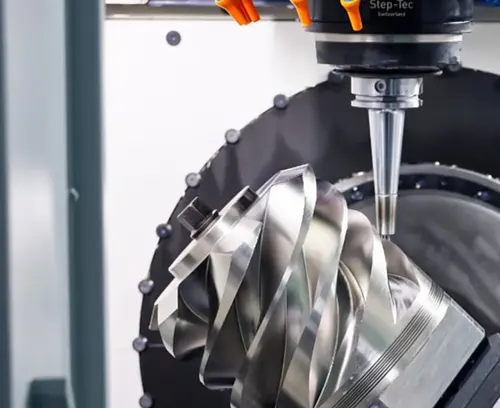
5 Axis CNC Milling
Offer 5-axis machining technology for advanced and meticulously crafted components. Featuring rapid processing, it's perfect for intricate designs.
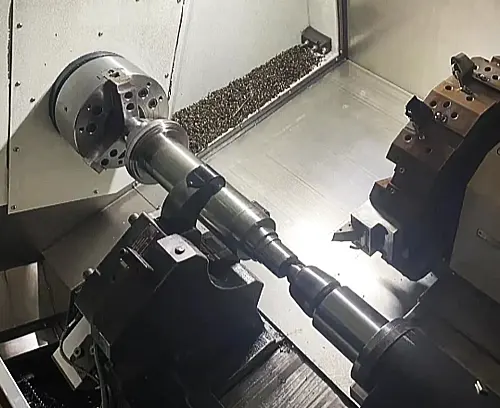
Precision Machining
Offer advanced manufacturing capabilities by streamlining diverse operations to boost performance, exactness, and shorten lead times, delivering consistent and superior results.

Sharp Corner

Undercut

Undercut

Thick Walls

Tolerance Guide

Small Hole

Narrow Area
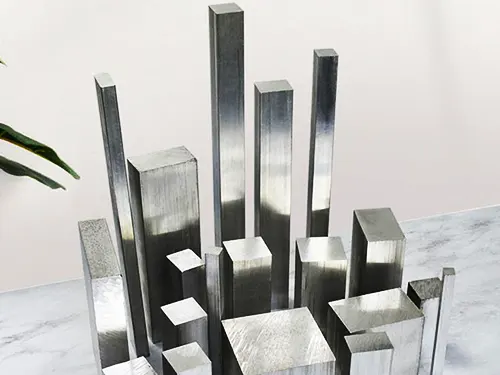
Aluminum
It is a popular material used in CNC machining due to its lightweight yet strong properties, making it ideal for a variety of applications.
It is corrosion-resistant, easily machinable, and has good conductivity, making it a versatile choice for manufacturing parts and products.
Some common types of aluminum materials used for CNC machining include 6061 aluminum alloy, known for its high strength and weldability, as well as 7075 aluminum alloy, which offers excellent stress and corrosion resistance.
Other common types include 2024 aluminum alloy, 5052 aluminum alloy, and 6063 aluminum alloy, each with their own unique properties and benefits for CNC machining processes.
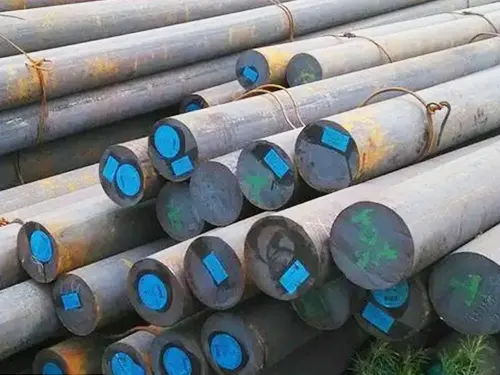
Carbon steel
It is a popular material used in CNC machining due to its high strength, durability, and affordability. It is composed primarily of iron and carbon, with trace amounts of other elements.
Common types of carbon steel used in CNC machining include low carbon steel, medium carbon steel, and high carbon steel. Low carbon steel is easily machinable and widely used for general purpose applications.
Medium carbon steel offers increased strength and hardness, making it suitable for applications requiring more wear resistance.
High carbon steel has the highest carbon content, providing superior hardness and abrasion resistance, making it ideal for high-stress applications such as cutting tools and springs.
Overall, carbon steel is a versatile material that offers a wide range of properties for various CNC machining applications.
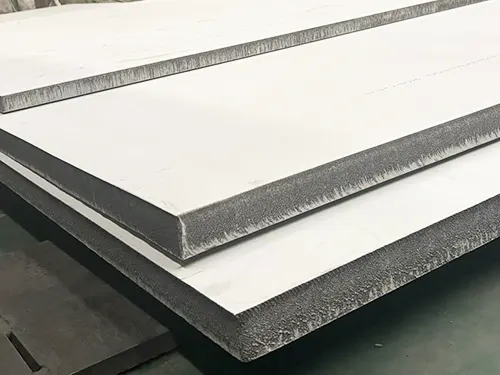
Stainless steel
It is a versatile material commonly used in CNC machining due to its corrosion resistance, high strength, and durability.
It is an alloy consisting of iron, carbon, and other elements such as chromium, nickel, and molybdenum. These additional elements enhance the material’s properties, making it ideal for a wide range of applications.
Some common types of stainless steel used in CNC machining include 304 stainless steel, which is commonly known as the standard “18/8” stainless and is often used in food processing equipment, kitchen appliances, and automotive parts.
Another common type is 316 stainless steel, known for its increased corrosion resistance and excellent strength, making it suitable for marine applications, medical devices, and chemical processing equipment.
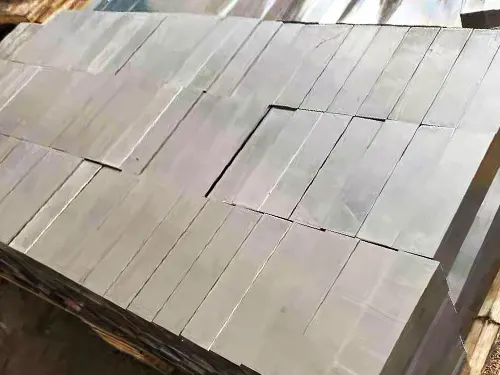
Tool steel
It is a type of material that is commonly used in CNC machining due to its high durability, strength, and resistance to wear and abrasion.
It is specifically designed to be used in cutting, drilling, shaping, and forming materials during the machining process.
Some common types of tool steel materials used in CNC machining are A2 tool steel, D2 tool steel, O1 tool steel, M2 high-speed steel, and S7 tool steel.
Each type of tool steel has specific properties that make it suitable for different machining applications, such as cutting, milling, turning, and drilling.
These materials are carefully chosen based on the specific requirements of the machining project to ensure precision, efficiency, and quality in the finished products.
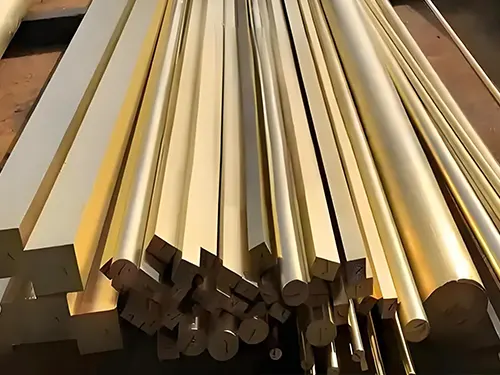
Brass
It is a popular material used in CNC machining due to its excellent machinability, corrosion resistance, and attractive appearance.
It is a copper-zinc alloy that is easy to work with and produces high-quality finished parts. Common types of brass used in CNC machining include C360, known for its high machining speeds and excellent finish, and C464, which offers high corrosion resistance making it ideal for marine applications.
Other common brass materials include C260, C330, and C385, each with its own unique properties making them suitable for a variety of applications in industries such as aerospace, automotive, and electronics.
Overall, brass is a versatile material for CNC machining that offers both aesthetic appeal and performance.
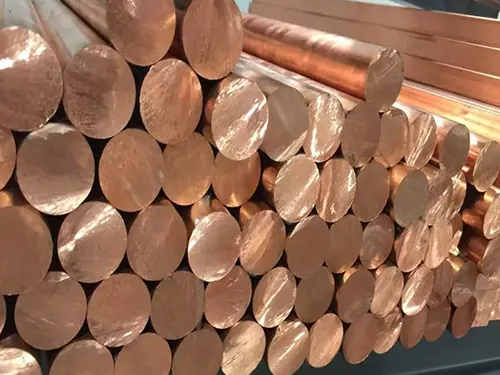
Copper
It is a highly conductive metal known for its excellent electrical and thermal performance, making it essential in electrical, plumbing, and industrial applications. Its natural corrosion resistance and malleability allow it to be easily formed into wires, tubes, and complex components without compromising strength.
Commonly used in wiring, heat exchangers, and architectural elements, copper also has antimicrobial properties, making it suitable for medical and food-grade environments.
In addition, copper is 100% recyclable without loss of performance, making it a sustainable and eco-friendly material for modern engineering and manufacturing needs.
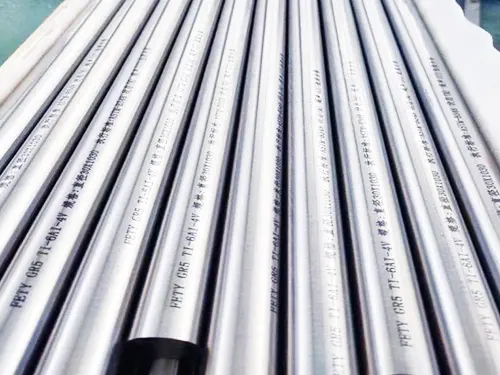
Titanium
It is a popular material used in CNC machining due to its exceptional strength, high corrosion resistance, and low weight. It is especially favored in industries such as aerospace, medical, and automotive.
Titanium is known for its ability to withstand high temperatures, making it ideal for parts that require durability under extreme conditions.
Common types of materials used in CNC machining include stainless steel, aluminum, brass, copper, and plastics like ABS and nylon.
These materials are chosen based on the specific requirements of the part being manufactured, such as strength, flexibility, or temperature resistance.
Each material has its own unique properties that make it suitable for various applications in CNC machining.
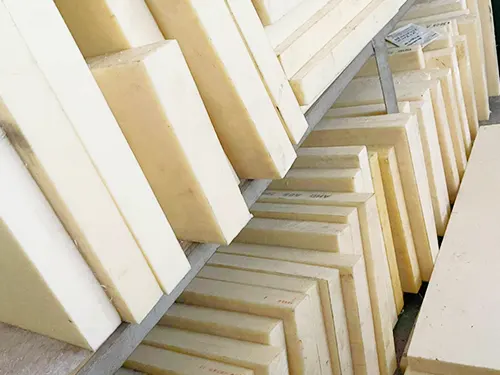
ABS
Acrylonitrile Butadiene Styrene, is a common thermoplastic material used in CNC machining. ABS is known for its excellent impact resistance, strength, and durability, making it a popular choice for various applications. One of the main advantages of using ABS for CNC machining is its low cost and ease of machining. ABS can be easily shaped, drilled, and cut, allowing for intricate designs to be produced with precision.
However, ABS does have its disadvantages. It is prone to warping and shrinking, especially when exposed to high temperatures. Additionally, ABS can release harmful fumes during machining, requiring adequate ventilation.
Despite its drawbacks, ABS remains a versatile material for CNC machining due to its favorable mechanical properties and cost-effective nature.
PMMA
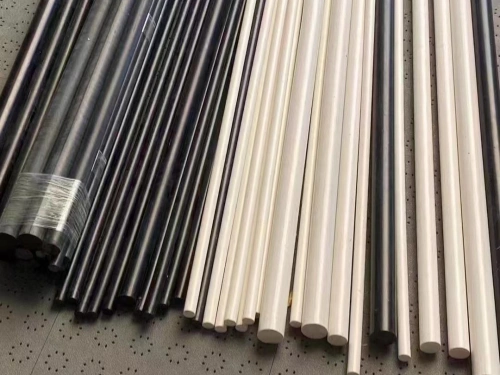
It also known as polymethyl methacrylate, is a type of acrylic material that is commonly used in CNC machining due to its versatility and ease of working with. One of the main advantages of PMMA for CNC machining is its excellent clarity and transparency, making it a popular choice for prototyping and producing clear parts. Additionally, PMMA is lightweight, UV resistant, and has good weathering properties, making it suitable for a wide range of applications.
However, PMMA is prone to scratching and can be brittle, which can make it challenging to work with in certain scenarios. It is important to take precautions when machining PMMA to avoid cracking or chipping. In conclusion, while PMMA offers many advantages for CNC machining, it is essential to consider its limitations when choosing it as a material for a project.
PE
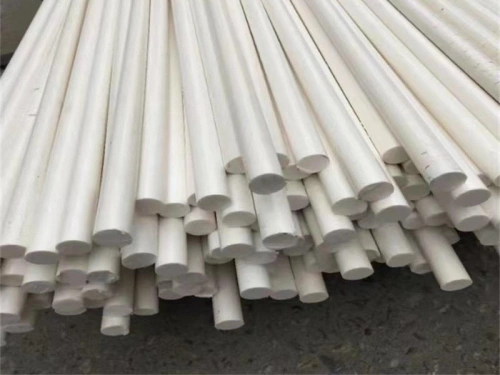
It is a lightweight, durable plastic commonly used in CNC machining for producing components that require excellent chemical resistance and impact strength.
It is available in various grades, such as HDPE (High-Density Polyethylene) and UHMW-PE (Ultra-High Molecular Weight Polyethylene), each offering specific benefits like low friction, high wear resistance, and excellent machinability.
PE is ideal for applications in the food processing, chemical, and packaging industries, where non-stick surfaces and moisture resistance are essential. Its easy machinability allows for smooth surface finishes and tight tolerances, making it suitable for parts like guides, liners, seals, and tanks.
Nylon
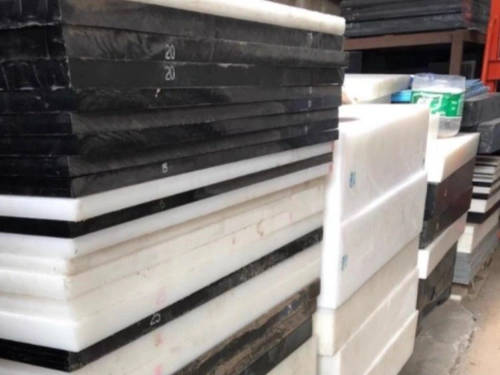
It is a common choice for CNC machining due to its versatility and durability. It is a synthetic thermoplastic polymer that can be easily shaped and molded through CNC machining processes.
One of the main advantages of using Nylon for CNC machining is its high strength-to-weight ratio, making it an ideal material for creating durable and lightweight components. Additionally, Nylon is known for its excellent wear resistance and low friction properties, making it suitable for a wide range of applications.
However, Nylon does have some disadvantages, such as its tendency to absorb moisture which can affect its mechanical properties. It also has a lower heat resistance compared to other engineering plastics, which may limit its use in high-temperature environments.
PEEK
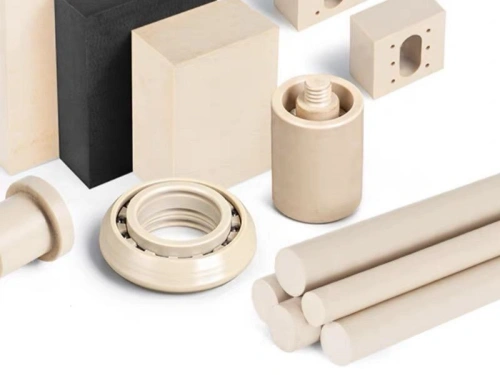
It stands for Polyetheretherketone, is a high-performance engineering thermoplastic commonly used in CNC machining.
Its advantage lies in its excellent mechanical properties, including high temperature resistance, chemical resistance, and exceptional dimensional stability.
PEEK is also known for its biocompatibility and ability to withstand harsh environments, making it a popular choice for industries such as aerospace, medical, and automotive.
However, PEEK can be challenging to machine due to its high strength and toughness. Its high melting point can also lead to difficulties during processing, such as tool wear and longer machining times. Overall, the advantages of PEEK outweigh its disadvantages, making it a valuable material for CNC machining applications.
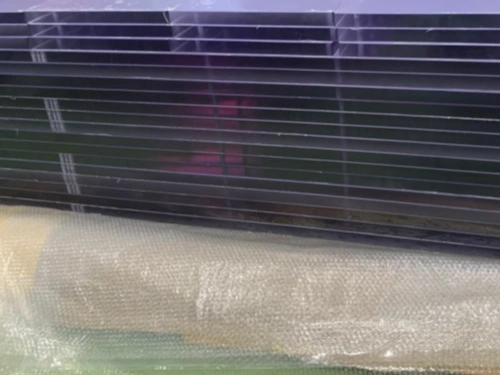
PC
It is a strong, transparent thermoplastic widely used in CNC machining for applications requiring high impact resistance and optical clarity.
Known for its toughness and durability, PC can withstand heavy mechanical stress without cracking or breaking, making it ideal for protective covers, enclosures, and structural components.
It also offers excellent dimensional stability and good heat resistance, allowing it to maintain its shape under varying temperatures. PC is commonly used in the electronics, automotive, and aerospace industries.
Though slightly more challenging to machine than softer plastics, it can still achieve precise tolerances and smooth finishes with the right tooling and cutting parameters.
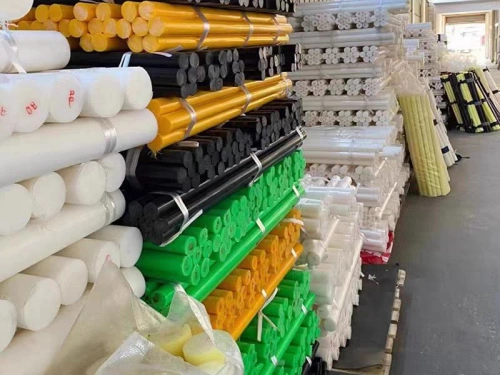
PP
Polypropylene, is a commonly used material in CNC machining. Its advantages include excellent chemical resistance, high heat tolerance, and good impact strength. PP is also lightweight, making it ideal for applications where weight is a concern.
However, PP can be difficult to machine due to its tendency to melt and warp. It is also prone to wear and tear, which can affect the overall durability of the part.
Despite these drawbacks, PP remains a popular choice for CNC machining due to its versatility and cost-effectiveness.
It is important for manufacturers to carefully consider the advantages and disadvantages of using PP in order to determine if it is the right material for their specific application.
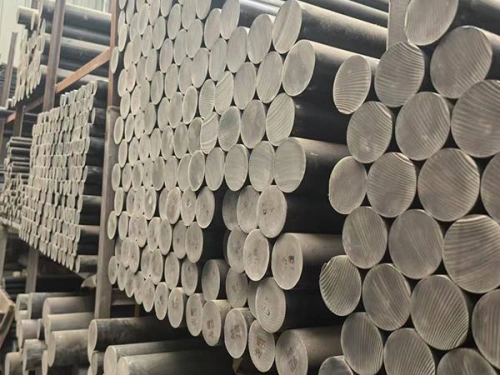
PET
Polyethylene terephthalate, is a common material used in CNC machining. Its advantage lies in its affordability and ease of machining, making it a popular choice for prototyping and low-volume production.
PET is also known for its strength, rigidity, and resistance to chemicals and moisture, making it suitable for a wide range of applications.
However, PET does have some disadvantages, such as its limited heat resistance and poor wear characteristics compared to other materials like nylon or PEEK.
Additionally, PET can be prone to warping and shrinking during machining processes, requiring close attention to tooling and cooling methods.
Overall, PET is a versatile material with both advantages and disadvantages that should be carefully considered for specific machining applications.
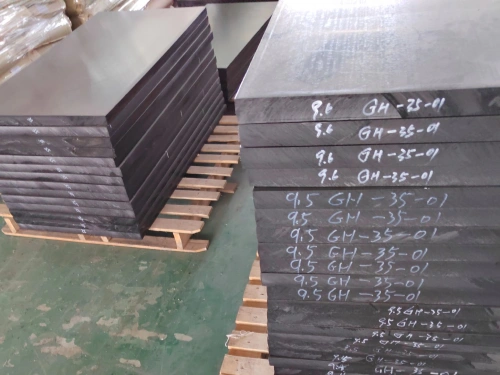
POM
PVC
Polyvinyl chloride, is a type of plastic material commonly used in CNC machining. It is a versatile and cost-effective material that is known for its durability and resistance to chemicals, making it ideal for a wide range of machining applications.
One of the main advantages of using PVC for CNC machining is its ease of machining and finishing, allowing for complex and intricate designs to be created with precision. However, PVC does have some disadvantages, such as its lower strength compared to metals like aluminum or steel.
Additionally, PVC can release harmful fumes when cut or heated, so proper ventilation and safety precautions must be taken when working with this material.
Despite its drawbacks, PVC remains a popular choice for CNC machining due to its affordability and versatility.

 21°C
21°C
- Temperature
- Precipitation
- Rain Chance
- Wind
- Humidity
- Pressure